An attitude of gratitude…

I am a ridiculously nice man I know this. Until… The following is a true story.

My Google Home device: *ding* I have a reminder for Scott

Me: Hey, Google, what’s up?

My Google Home: I have a reminder called you have a doctor’s appointment in 4 days.

Me: thank you, Google.

My Google Home: thank you for thanking me. I guess we are caught in a thanks loop…

I think I broke my Google home device.

I believe the key to happiness is genuinely twofold.  First, you must wear a smile and have gratitude for everything in life, whether big or small.  This attitude means no matter what happens, keep a positive outlook and always have a sparkling sunny disposition. Second, when you need help and require assistance, people will be willing to assist you if you are gloriously glowing.  Grumpy Gus’s get bitter rejection when support is needed the most, so no sourpuss faces on your mug. 

My experience shows most people fear those who are different as they fit into the others category. Individuals who walk with a wobble, use canes, forearm crutches, or even use wheelchairs get shunned and chagrined. However, those of us who ambulate using these methods are the ambassadors of the disabled, meaning we need to put our best foot forward.  We need to prove we should not be rejected and neglected but deserve the same respect as everyone else.

The second part is subjective yet more critical, in my opinion, which is to help people before they ask for any assistance.  To insert true happiness into the mess we call society, I say pay it forward by helping others even when they cannot help you back.  Asking is the hardest part of need, so if we can stand out to show we care for a stranger, it makes us better people. Be aware you do not have to do anything outside of your comfort zone.  The list of volunteering options is just as long as the non-volunteering items that are desired.   A kind word, an offer to do the dishes, a ride, a smile, and these seemingly simple stunts may seem silly but may mean the world to the recipient. 

When I was growing up, my family was lower middle class, although we were a hare’s breadth away from being poor. Unfortunately, our family held onto the title of the lower middle class like it was the last Twinkie at a Weight Watchers meeting.  My mother, a single parent, worked a full-time job and went to college, so we rode that tightrope between poor and poor-ish for seven years.

We were low-income, but I had no idea what being poor meant until I met some genuinely poor people in high school.  I was not afraid to make friends with anyone, including those shunned and socially shamed because of their appearance or clothing.  I made good friends with those who were the real impoverished individuals in high school.  Freshman through senior year was the most challenging years for a kid to hide the family’s financial footing.  So I had both rich and poor friends though I learned the most about life and the real meaning of friendships from those with the least.

I learned from seeing this downtrodden lifestyle and how some of my friends did not work so their parents could do so.  Most days, Jim needed to watch his younger siblings because his parents could ill-afford decent childcare.  I quickly realized that when we were going to eat fast food, Jim could not buy food for lunch.  I did not want them to feel bad and look needy if I only bought food for him.  The solution was to pay for the group as not to single out the most disadvantaged amongst us.  It felt good to do good for others without making Jim feel embarrassed or ashamed for not contributing financially. My action was done with no expectation of payback, thus I began a life of utilizing opportunities to pay it forward or daily acts of kindness.

My mom tells me I am merely leading by example, yet I genuinely hope people are willing to follow suit.  I understand not everyone can afford to do a lot, but little acts of kindness make a difference in this bitter-filled world.  So the next time you are out at your favorite coffee place, buy a coffee for a stranger or do some other random act of kindness.  I guarantee you it will make them feel good, but it will give you an incredible feeling as well.  On the other hand, if someone does something kind for you, be gracious and say thank you while consider paying it forward.

Be the change in the world that you want to see- Gandhi.

The hike that almost killed me…

I have decided to try telling some of my more difficult early multiple sclerosis stories. I was scared to shares these torturous tales as I do not want anyone to judge me for my feelings of fear or fright. Like a friend once told me, I was making “mountains out of molehills”, and I should “build a bridge and get over it.” However, this pain still lies deep in my psyche, and as I write about it nearly twenty years later, I still feel the anxiety and dread. This disturbing tale is going to take much time and tears to put down in writing.

It is my understanding that talking about issues such as these is imperative to one’s mental well-being. However, these troublesome tragedies are difficult to think about and are no more comfortable to put into words. I have to keep reminding myself that everyone deals differently, which is why some people come back from war mentally broken, and others have no visible or invisible scars. The following blog is my war story, and it has broken me mentally, leaving scars on my psyche that will haunt me forever.

In Columbus, Ohio, the metro parks hosted a weekly winter hike program every year, and my mom invited me to join her and my stepdad. Up to this point, I had virtually no MS symptoms, although this time, that would seriously change. On this day, I would meet the maleficent monster who would haunt my nightmares and negatively change my life forever. The hikes are held at various parks around Columbus, Ohio, starting on Saturday at 9 am. I showed up in the morning wearing my hiking boots, ready to take on the snow Mother Nature spread that night.

Most people had proper pad paraphernalia, although a few sadly did not understand the importance of suitable footwear. There are often several trail lengths to choose from, including a short one mile a three-mile, and sometimes five milers. This park offered one and three miles, and being we were all avid hikers, we chose the lengthier three-mile route.

The hike started on time, bright and early, even though it snowed significantly overnight. About a quarter of a mile in, I began to feel extremely exhausted and verified with the rear guide how far we had gone thus far. I told this rear volunteer I would be going back to the beginning and explained I was fine, but I felt a little unwell. Unfortunately, that was when I should have quickly clarified I have multiple sclerosis, and extreme cold can quickly and viciously rip all strength and energy from my being. Right then would have been the perfect time to define my monstrous MS malady, and it would be in my best interest to have someone walk back with me. However, I was a big bad bull-headed Marine who was embarrassed and ashamed to ask for help even at my detriment or peril.

As I walked back alone, the wind was bitterly cold and felt like sandpaper dragged across my face. I could feel my strength vanishing as every step became slower and was more difficult, just as my thinking became sluggish and lethargic. There was no one on the trail, and my weakness was quickly overpowering my tenacity and perseverance. I had less stability with every passing second, and I needed to lie down for just a minute to catch my feeble breath, then I would finish the hike back to the start. After I laid there for several minutes, I heard a voice call out, and I panicked. I jumped up and ran to a walkway underpass about ten yards away, and I stood against the wall as the group hiked by.

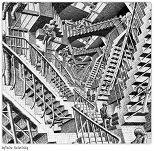
I have no clue why I ran, but it was likely because I was always an able-bodied, weightlifting, tough-as-nails Marine, and I did not want to appear weak. One of their group guides was left behind with me, so we walked back on this treacherous trail together. However, the walk was slow and desperately difficult, as my weakness and sluggish walking were back. I tried to hide my wobbly walk from this woman, but I was as easy to read as a Dr. Seuss book. As we walked back in silence, every slight uphill step felt like climbing Mount Everest, all the while the guide continually looked back and cautiously observed my every step. It felt like I was caught in an MC Escher drawing as the path just kept coming with no end in sight. This female guide did not understand nor question my arresting ambulation oddities, and I did not share. I was an Eagle Scout, US Marine, and a young guy in his twenties and felt incredibly ashamed of my insufficient capabilities.

When we made it back, I sat silently on a bench for twenty minutes or so before I began to feel physically fine. Once I was feeling up to par, I decided to join my family to hear about their adventures. My mom told me about their hike and then asked where I went, and I downplayed things by saying I found a bench and sat for a while. It turned out my hike was a half-mile of sojourn I will never forget.

I now understand my MS and the physical restrictions and challenges that limit my abilities in these situations. Unfortunately, sometimes I take things for granted, which can cause havoc and encourage me to devalue typical transfer movements. These thoughtless actions can force me to make mistakes that can threaten my well-being. However, I am always trying to think through everything I do, including sitting positions and transfers. So, yes, this day significantly impacted my nightmares, but it also created a staggering impression on my understanding of multiple sclerosis and my life to come.

Empathize not sympathize

Quickly conquer chaos…

Staying organized in life is an immensely important endeavor, no matter who you are. It is beneficial to keep all of your doodads and doohickeys diligently divided so you can reach them in an instant. The intelligent choice is to keep your selection of widgets and digits neatly stacked for your quick, convenient calculations. In addition, it is essential to keep your entire calendar of events prominently posted for your perfunctory perusal.

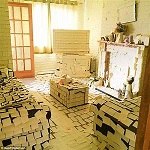
As a twenty-year veteran of multiple sclerosis, I like to stay exceptionally coordinated and formulated to help my life run smoothly. However, things have changed since before I began using technology to aid my memory and simplistic systematization. Before utilizing any automation application, I was old school, and the inside of my house showed it. Everything was coated in a thick yellow layer of post-it notes, reminding me of things like I was a retired senile scientist. These notes reminded me of the most mundane tasks because, at the time, depression made sitting on the couch my only priority. These inked notes reminded me of everything, including brushing my teeth, meal times, and when to check the mail, along with many other just as ridiculous reminders. My bills were all piled neatly in several separate stacks showing me what had been paid and what was still outstanding.

There is now so much technology to help you stay organized excuses have gone with the dodo bird. 3.48 million Applications exist in the Android Play Store, and 2.22 million apps reside in the Apple app store, reminding us there are many apps for that. These application operations can assist you in budgeting, household chore reminders, or even when to simply throw old apps out the window. Gone is the day of tying a string around your finger to remind you of a task you inevitably forget anyway. The process of writing a to-do list on a piece of paper you soon lose track of is a thing of the past.

Smartphones, Google Home, Amazon Alexa, Apple Home Pod, computers, tablets, and even smartwatches make staying unorganized a problematic task. We MSers and most people need to find what works best to keep our lives formulated and coordinated to avoid confusion and chaotic clutter. Multiple sclerosis causes plenty of mind messes like shoddy short-term memory. So we must be aware of our weaknesses and find assistive tools to help us be the best we can be. Do yourself a favor and find apps to help organize all areas of your life, from finances to scheduling and everything in-between, as the possibilities are endless.

With organization comes empowerment.

Bipedal position priority…

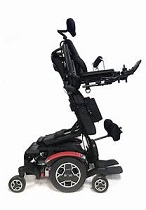
The following entry is my last blog in the series discussing my standing power wheelchair. Let me first explain when a person is in an accident and must live in a wheelchair, quite extensive training is shared. This information improvisation is given because a wheelchair is life-altering when added to someone’s existence. However, I was given a manual wheelchair but not even five minutes of life lessons which would have helped make my life exponentially better. Although getting into my standing device is a top priority, these facts mean it is not the only purpose for physical therapy.

We have all heard the horror stories of how slow the Veterans Administration can be with the red tape. However, this is my story of how things have moved rather quickly to get everything I require and desire. This speed is even though the pandemic is an ongoing obstacle and constantly sends stuff to slow success.  After making my land-stand demand, it did not take long to receive the upright stature manufacturer via special delivery.

When I received the massive mechanical monstrosity from the Veterans Administration, I was faced with a new challenge. My goal is to learn how to climb this contraption calamity unassisted and stand several times a week. The VA rep and I spoke pretty extensively on my options to transfer from manual to power chair safely and unaided. We talked about building a platform to make my manual chair at the same elevation as my power chair, later recognizing this was a bad idea. Also, we discussed using a power elevating bed, inevitably adding six extra transfers into and back out of the standing device. This process would be too exhausting before standing and another bad idea. I only wish a physical therapist was involved in the conversation because the therapist who eventually helped me said a direct transfer is the best and only real idea.  She shared how it would become second nature and easier in the long run while challenging initially.

The first thing I learned in my new manual wheelchair life is the plethora of unexpected muscles required. Every movement brings a need for a new set of power holders you did not know you had or even needed. Pre multiple sclerosis, my choice for exercise was weight lifting, yet I was still missing the correct strength for my sad seated situation. There are a mere 206 bones in the adult human body, but about 600 muscles, meaning many do not get used in daily life. These muscles can get pulled off the bench when life situations change, like a wheelchair, requiring new abnormal movements. It is also my understanding every position and action the body makes requires stabilizer muscles. These equilibrium enforcers encourage individual external balance allowing synergy in the body movements.   

I wanted to wrap this blog series up in a pretty little bow and simply say all is well. I was hoping to share I am standing in my massive machine several times a week, and it only took a month or so of training. Unfortunately, that is not how our wonderful world works, and sometimes you must put in your blood, sweat, and tears. Many times you must refuse no for an answer and bust your hump and make life happen. It is essential to understand life often requires hard work no matter what you want to accomplish. So let me close by saying I am pleading for perpetual progress leading to plummeting problems, and my daily life is safe and secure.

At times life demands significant effort so make yours count.

Read more about my MS adventures, visit http://www.mymsramblings.com    

This is me, Barenaked…

My regularly scheduled blog will not be airing today as I bring you this special report. Instead, my next blog post will release at its standard time in two weeks. 

Some people have questioned why I say I am not deteriorating, yet lately, I have shared my struggles. Let me explain why I say these things, although I can only speak about my experiences. First, there has been a significant difference for me between pre and post-pandemic exercising and blogging both. Second, I have gone through something like this before, and although I recover slowly, I still do return to my fitness level.

Before the pandemic, my life was full of activities keeping me busy and always moving.  For example, I swam three days a week for two to three hours each day, giving my body abilities I lose without exercise. If you read my blogs before the pandemic, I wrote about things like when I did my 5K in my wheelchair, something my endurance encouraged.  I also learned how to swim without using my legs or a flotation device, giving me another form of fantastic fitness. Three months after learning this new swim skill, I swam eight miles to raise money for a swim challenge the MSAA put on.  I also wrote about the various sports and extreme sports available for wheelchairs and the one sport that piqued my interest: kayaking. Lastly, I wrote about my MRI, which showed no new activity. I blogged about all of these things, exhibiting some great activities I accomplished, and my multiple sclerosis did not hold me back.

During this pandemic, I have not been able to exercise the same as I had before. And this is because the pool releases the bonds of gravity, making it exceptionally easy to reap positive impacts from total body exercise. Unfortunately, this information means my physical struggles have been a little bit more frequent. Although, I have been through a stoppage before and have recovered. Be that as it may, my doctor pointed out some of the most recent issues I blogged about are not MS-related, reminding me father time does not care about your problems and continually moves forward.

This blog refers to me and my choices in life and discusses the path I chose and why I zigged where others might have zagged. The preferences we make in life are not right or wrong but are just the decisions we make, and we have to live with any outcomes. I have never told anyone not to take any MS medications without doing basic research.  Either we make our own decision, or someone decides for us. Yet, no one should scare you into taking a drug that might not be right for you, do your research.

In the beginning, I let the doctor decide for me because he is known as a great doctor in Columbus, Ohio. Although we did not discuss options or even medications on the market, he merely said take this and gave me details on receiving the meds in a cold pack via UPS.  The first medication he prescribed I took for two years, yet sadly it seemed every appointment I had deteriorated a bit more.  His recommendation was always to wait and see, which led to the next visit and declined even further.  Finally, after two years of this bad body breakdown, he put me on a different medication in which the degradation continued.

After deteriorating for the third month, when starting the new medication, I began to do research. There were four MS medications available at the time, and I had failed on half of them. As a result, I no longer have faith in the Pharmaceuticals for MS and searched to find what others were doing to manage their MS. Since diet seemed to be a significant factor, I followed the doctor Swank diet, specifically for multiple sclerosis. 

I then found something called low-dose Naltrexone, aka LDN, which has been helpful for many MSers.  LDN was FDA-approved in the 1980s for drug and alcohol addiction in much larger quantities, that plus the thousands already taking it, let me know it is safe. There is an annual National LDN Conference where doctors from all over the world get together and discuss its benefits. I researched diligently for well over a month, and I even found a doctor to prescribe LDN. When I began taking this medication, others on LDN commonly said any symptom that began six months prior to starting the medicine could get better. Only some of my issues got better, yet when my mom saw me walking with a cane and not struggling with my walker, she cried like a baby. I have been taking LDN continually ever since that first prescription and plan to continue.

Do your research because who is a better advocate for you than you? Do not listen to only one person when doing your research and if anyone spouts statistics, say thank you and keep studying. It sounds like a lot of work, and it can be, but it is a beneficial burden when your health is concerned. Read as much as you can and learn why this medication is better than that one. Why is the chance of becoming ill less likely with one drug over another?  You have options, so learn them and do not let others make your choices for you.  I understand it can be overwhelming, so slow down, take a breath and find a friend or family member to help you get in a good headspace. Join an MS support group or two since they are living it, they can tell you the facts. I do not feel it is as bad as you think it is.

Also, go to any number of online MS support groups and find out who is not taking any medication and is doing well. I have known people to have used the DMTs and do well and others who take it and do not. I also know people who have not taken any of the medications and done well and others not so much. And for those who spout the statistics like they are the literal words of God, your statistics have failed me not once but twice with the MS medications I tried. This fact proves statistics are nice but not the end-all-be-all.  There is no right or wrong answer for everyone, so you have to decide what is best for you. Once again, who is a better advocate for you than you? It is your life and your health so determine if you want to make the decisions for yourself or do you want others to make the call for you? These words are just my humble opinion as a twenty-year MS veteran.

We are all trying to be the best of ourselves. So do not let someone tell you who to be.

Part one: The Fault in Our Cosmos…

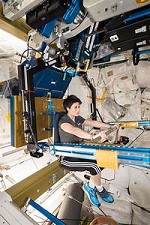
There are many health benefits to the simple act of standing in an upright position.  However, the bipedal part of society does not need to concern themselves with this issue as they already reap any ambulation rewards. Strengthening bone density from bearing weight onto your lower limbs seems small but is a vital part of life. Skeletal deterioration was a quizzical concern NASA had to carefully contemplate to help astronauts when returning from space.  When visiting the cosmos, your bone density weakens one percent each month in zero gravity. NASA finally designed an exercise machine allowing an astronaut to exercise and feel gravity like on earth.

Standing also helps with spasticity in the muscles caused by pitiful positioning, circulatory slowing, and poor posture.  The bipedal propulsion position also encourages proper blood flow, which is difficult while seated, causing more problems.  When an ambulatory individual is sitting at the office, many of these issues plague them as well.  These concerns and the fact many people are heedful of healthy habits inspired the resurrection of the standing desk.  These physical challenges make the simple act of walking on two legs an essential part of life.

For several years at my old house, I would stand using a grab bar and sink in the bathroom to do five squats, and calf raises hourly.  When I moved, the size and shape of my new house made this procedure more difficult to continue because of the travel time and inconvenience. In addition, the stopping of my mild exercise program encouraged my leg muscles to deteriorate, making many tasks a struggle.  Wanting to reverse my lower limb loss, I decided to go to the VA for physical therapy with the sole purpose of learning to stand at home with limited assistance.

While at the VA physical therapy, I was able to stand with minor assistance and use the parallel bars. I thought standing repetitiously at the bars would reward me with positive results, yet sadly, it is not in the cards for me to stand unassisted.  The physical therapist and I talked, and the conversation evolved into power-standing wheelchairs and the benefits I could expect from having one. I clarified my intention of not going to a power chair until it was a physical requirement I could not ignore. I want to use my arms until I lose my arms, I proclaimed fervently. The therapist saw I was steadfast in my ideals and quickly clarified it was not an either-or issue.  She explained many of her clients have both types of chairs. They use each depending on the day and how they feel. However, they stand a lot at home using the standing chair because more benefits are received as more standing is achieved. 

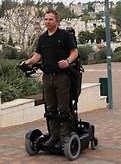
The next thing we did was schedule a power chair representative and a veteran rep to visit my home.  The delivering duo came to my house and brought out one of these mechanized monstrosities to show its capabilities. Most power chairs have limited skills, only moving anywhere on a single plane like forward and backward.  Because of its limited abilities, the motor is small and sits directly under the driver of this chair.  This action means the footprint of these armchair accommodations is relatively small for such a big seat. However, a standing power wheelchair must counterbalance a standing human and has a larger footprint.  The sales rep sat in the chair and began moving levers and wrapping straps, showing me how it worked.  They then asked me how best to position the chair to transfer into this colossal contraption safely.

When I pulled alongside this massive machinery, two things stood out and made me realize a transfer would not occur.  The first thing that stood out to me like a burnt potato chip was the six-inch gap between the two chairs.  Next was the four-inch height difference on the other side of the six-inch gap.  Like Evil Knievel jumping over Snake River with his jet-powered motorcycle, this too would be a failure if I tried.

I started this blog entry four months after the beginning of the pandemic. It is part one in a series talking about attaining and maintaining my power-standing wheelchair. I had to wait for the VA to figure out my options for getting into the chair by myself. The possibilities for me, self-mounting this motorized mechanism were plentiful but none yet successful. The task is essential, making options extensive. Stay tuned for the next episode, where I discussed the battle to plop my posterior to the proper position to transition this Titan Into a training tower to teach my leg bones to build more density.

Machines will save our lives, not dehumanize.

Horribly hidden hits…

One of the most significant issues with multiple sclerosis is the many hidden symptoms leading to accusatory statements.  The invisibility of these MS issues means others do not see, perceive, or believe they even exist.  Two of the primarily posed comments are you do not look sick; you must be okay, or even, I know someone with MS, and they do not complain like you.  These statements drive MSers insane and can cause us to stand our ground vociferously in defense. All people with multiple sclerosis are different, so if you know one person with MS, you only know one example of this inexplicable, unpredictable medical condition.

I have been a member of several local MS support groups and currently in various MS Facebook groups. In the following blog, I will do my best to explain the experiences of those dealing with these conundra-causing covert complications. I am in a wheelchair, so rarely does anyone question the unseen symptoms impacting my life. First, I must help defend my MS brothers and sisters by spreading my words to the ill-informed masses.  I hope using my words can do justice for all of us warriors struck with multiple sclerosis.    

In the multiple sclerosis family, we deal with an excess of dilemmas and even daunting doubt from others. On a good MS day, it is merely a beastly condition continually taking from every aspect of our daily lives.  Our courage gets questioned while our pride is persecuted as we struggle through our every movement.  We endeavor setbacks every time we attempt to take one step forward, not backing down from the fight for our very existence.  Most people will never know or understand the debilitating issues we warriors go through to simply get out of bed in the morning. Yet with every strike against us, we persevere like a baseball star hitting out of the park every psycho spitball thrown by the diabolical devil himself.

We no longer have the luxury of taking any part of our lives for granted and must consciously consider every minor task.  Simply drinking a glass of water, for many MSers, requires extra steps that could choke and kill us if not followed.  Like a pitcher watching the catcher’s hand signals, we must follow the extensive steps for every essential task.  We have a deep-seated fear of dinner out with friends or family as we wonder will tonight be the night ending in an ambulance trip.  These constant concerns continually capture our consciousness because the risks can be dire if not followed.  It is no wonder why melancholy and depression fill the manipulative and maleficent world of MS.

We have deeply drenched fear of every movement and how our multiple sclerosis-riddled bodies react to our locomotion.  Will the next treacherous step we take land us in a motorized movement machine changing our lives forever?  We think about the terrors while we are awake and maybe get a reprieve when we slumber. This respite from our day-mares is only if the sandman does not brutally bombard us with cruel memories of what we will never be.  So much depression forces us to cry as the rivers of fears turn into oceans of tears, drowning out our thoughts of survival.

There is a symptom with a perfectly pleasant name but has devastatingly diabolical impacts on the MSers body.  MS Hug is the name of this symptom, and physical terror is its game. The explanation to me was a python that wrapped itself around you and squeezes. The squeeze is hard enough, so every lifesaving breath is excruciatingly exhausting. These breathing complications are not only challenging, but they can last for weeks and, from my understanding, even years in some cases.  It was detailed from someone else as five bands wrapped around the torso tightened like a vice grip allowing only slight pain-filled breathing. 

Pain is a common theme across these invisible indicators, severely impacting my multiple sclerosis family. The pain some MS patients go through is so torturous they need a properly positioned pain patch.  They might even require some other form of continual pain soothing medication to dull the suffering though barely.  In life, most people know the mundane pain of a headache, stubbing your toe, or maybe even a broken arm.  However, the pain of those with multiple sclerosis continues forever, yet we have learned to smile through it like the warriors we are.

Most people have been tired from a long day at work or f from a vigorous workout. However, from an MSers perspective, we sometimes get dreadfully debilitated and need a respite from merely taking a shower. Needing a major rest after a minor task is as common as the sun rising in the east.  Fatigue impacts parts of our lives we do not always expect, like it can make us ridiculously weak. For example, I have been so tired my speech gets significantly slurred and hard to comprehend. This complication causes a need to close my eyes and rest for at least ten minutes as soon as it is physically advantageous. If I do not find relief, my disabilities can get excessively worse, requiring a more extended respite.  

I hope I have done justice in explaining some of the invisible symptoms plaguing some multiple sclerosis patients.  My MS brothers and sisters and I courageously combat these unseeable issues like the battle-tested warriors we are.  I believe these hidden afflictions would take down most mere mortals, yet we stand with our heads held high like superheroes in a movie.  Like Tub Thumping said in their song: I get knocked down, but I get up again; you’re never going to keep me down.

They cannot stop us, superhero warriors.

I understate, not exaggerate…

Disclaimer alert: I have visited the darkness, stood on the ledge, and peered over, questioning everything deciding if I wanted to continue on this road called life. After coming back from looking into the eyes of the Ender, I chose never to question things the same again. I say that to say this, my struggles may be daily and seemingly endless, yet my attitude reminds me every moment’s misery is a choice.  In this blog, I discuss these situations light-heartedly yet do not mistake my jovial attitude as total ignorance towards the challenges of my life. I am not saying my life is more complicated or even more straightforward than anyone else, we all have difficulties, but they are all different. Lastly, do not look at a person with MS or any medical condition on a TV show or movie and think it is accurate because it is not.

People periodically pose a perplexing query to me. Occasionally others say I probably exaggerate my blogs to be more impactful and wonder what MS is genuinely like. These periodic prods from people primarily push me to clarify the facts of how MS affects me. My life as an MSer is complicated to describe because you will not understand it unless you have lived it. Even others who use wheelchairs may not understand one hundred percent because our chariots are all built differently since our needs vary drastically. So let me share one seemingly simple stint of life for most taking only a few minutes while it becomes a laborious job for me.  On an average day, it will swiftly switch into a daunting daily duty that can take me nearly one hour. 

I wake up and do not hit the snooze button because my mom taught me when I was young, sleeping in is burning daylight, so I get up. I wake up on the left side of my bed, and to get out of bed, it is a wrestling match of Epic Proportion. Sadly, before I even move, my legs go into a stiff spasm tighter than the core of a baseball. I know how to massage it out to make it stop hurting, but the spasm simply stiffens my entire body, so I cannot bend it and must painfully wait it out.

My next challenge is to rotate myself counterclockwise ninety degrees, so my feet dangle over the edge of the bed. Any movement is made more arduous by my leg muscles that constantly play a movement game. Roulette is the game name, and torturing Scott is how it reins the same lame game. As I twist and turn, I grab the bed sheets and pull towards the foot of my bed, and continue the leg wrestling with myself. While I try to scuffle and shuffle on my bed ruffle, my leg muscles take turns tightening in opposing directions causing various problems against my every movement. 

When my quadriceps muscles take their turn, they shoot my legs straight out and stiffen them like I am in a planking competition. I never make any movement quickly, and now it is my hamstring muscles that tighten as I sit up on the edge of the bed. While this muscle tightening pulled my leg in instead of out, causing its own set of problems. This game between my leg muscles pushing out and pulling in means I only have a few seconds before I can expect the next shift. I quickly get proper pad placement and positioning and prepare for my posterior propulsion. I massage my thigh muscles to keep them from spasming for a few minutes as I prepare for my lift and shift. After several additional minutes, I can do a derriere drop directly onto my wheelchair seat.

All of this maneuvering so far has only taken thirty minutes and has moved pretty smoothly, all things considered. So let me stop for the interactive part of the show. Imagine you went out to dinner with some friends and you had some food that did not agree with you. When you get up to rush to the bathroom, the previous scene is keeping you from quickly getting to where you need to go. Could you make it to the toilet, or do you have to make a sixty-minute clean-up part of your morning? Some of us do not have the luxury of deciding and is chosen for us. And it is never the easier path.

Next Interactive part. Preparing for bed, you must take off your day clothes and put on your PJs. First, sit on a high-back chair and try to remove your clothes without standing or getting any assistance from your legs. Then after you remove them, put on your PJs while continuing to sit without the aid of your legs. For some wheelchair users, this is an easy task, yet for some of us, it is not.

It is difficult when you are in a wheelchair to clean up a big mess. Let me clarify when you are in a wheelchair and you live alone, every mess is a big mess. For example, the other day, I tried to scramble a couple of eggs and microwaved them when I dropped the mug and raw eggs onto the floor. It took me just over half an hour to clean up as much as I could. I then had to have a friend come over and clean the rest of the eggs. My friends and family are few and far between, but they can attest that I do not discuss this kind of stuff with them. I only talk about things if I can make a joke out of it and make light of any situation. I never want to be seen as the constant complainer or playing the woe-is-me card or even looking for pity, making people want to avoid me. Life is ever-changing, and life with a medical condition endlessly evolves like the numbers on the stock market.

Disappointments are inevitable, but misery is optional. 

Horrified, mortified, and terrified…

Before the current pandemic, I was swimming regularly three days per week at a local community center pool. My time in the water varied depending on whether I was taking a class, simply swimming, or both and would last two to three hours each day.  The pool truly worked magic on my body, maximizing my muscle mass and movability.  It was also beneficial to quiet the many mental monsters voicing various ventures which would not benefit my soul. 

Each year, the pool closes for two weeks so the staff could clean completely crown to the ground.  I exercise at home during this shutdown, but it was not the same.  No matter what I did, I could feel myself slowly deteriorate, so I eagerly waited for the pool to reopen. Unfortunately, this discouraging degradation happened even in this small time frame no matter how much I exercise, proving my MS cares not about time.  After the two weeks of astringent atrophy, it would easily take several additional weeks to build back my body when returning to the pool.

It is essential to know that everyone with MS is different. For example, you can put ten people with multiple sclerosis muscle spasms in a room, and every one of them would likely have spasticity to a different degree and in a variety of body parts. So when I am making a statement about MS, it is my experience and not everyone with multiple sclerosis. I never want anything I say to sound like an all-encompassing blanket statement, as that is never what I mean.

Sadly this pandemic has not been kind to me.  I would have gladly accepted indifference or total disregard towards me, yet that was not the case.  I minimally exercised in the first few months as I thought we would return to normal very soon. I then became more serious about my fitness, although there is no one to keep you accountable when you are alone.

 Someone asked me about a month ago how long I would be capable of living in this house by myself.  That innocent-sounding question has kept me up many nights and instilled total trepidation, and fear like no horror movie ever has.  The thought terrorizes me because I have always been able to do so much by myself, and now I will need an assistant for my pool time if that is the correct title.

I am simply scared out of my mind at the prospect of not being able to live independently. Yet, this query poses a new quandary: what is the alternative to this newly-developed dilemma?  I do not want to think about it, but I cannot ignore it anymore. This monster of mythical proportion called MS has relentlessly and brutally beaten me like a bookie collecting a debt.  Since this maleficent monstrosity is invisible, I cannot defend myself, meaning I must merely take the abuse.  Every time I think things have stabilized, something else occurs and proves my thoughts are wrong.  As of late, I have realized I cannot go to the pool by myself for a while, nor can I go for two or three hours each day like i used to.

So here I sit, deeply drenched in dark dread that rocks me to my core, and I do not know what the near future holds for me. I do not know what to do. I know I have to hire someone but who? I do not want to hire somebody for thirty to fifty bucks an hour which seems to be the going price but extremely expensive for my budget. So, of course, then my question becomes where do I find these professionals or more importantly the non-professionals to find someone to hire?  I would honestly shed a tear or two, but I cried so much in my early MS days that a dehydrated ant could sweat more water than my tear ducts can create.

I AM MORE SCARED THAN EVER. I AM AT A LOSS.

Dr. Jekyll and MS hide…

Inside each of us, two Natures, the good and the evil, are in constant combat on a quest for control.  All our lives, the fight rages on between them, and one of them must prevail.  But in our hands lies the power to choose what we want most to be and what we choose is what we are. I have even heard the query like this: are we good people with bad intentions, or are we bad people with good intentions?

I live peacefully in a wheelchair-modified home that I continually add automation where ever needed. These technological adaptations I use to help keep me living comfortably and independently. My goal is to be as self-sufficient as possible, so I continuously seek out innovative technology that rides the line between affordability and usability. In other words, I do not want any mechanization simply to show off to friends and be the “big man on campus.”

However, an uncontrollable demon has moved in without my permission and will not depart per my demand.  No eviction notice will work, and the authorities cannot help as this beast can hide in plain sight. It has taken root deep within and takes control without consideration of the host body, me. This vile creature takes control of my lower limbs, lengthening the time it takes me to do anything.  My permission was not requested, nor was it given, and the abuse I receive is brutal and does not let up.

I take CBD oil before bed which helps eliminate about 60% of my muscle spasms while I sleep. And yet, at times, my legs still flutter like the wings of a hummingbird after a triple-shot espresso.  So when my alarm goes off in the morning, I am tired after a night full of lower limb leaping, twitching, and general jerking.  As I attempt to get out of bed, my legs quickly stiffen, requiring me to wait to get out from under the blanket. My lower limbs finally release, and I begin to scoot around, so my legs hang off the side of the bed.  I pull myself up so I am sitting correctly, and as I reposition to straighten up, my legs quickly stiffen, harshly thrusting me back flat on the bed.  After a couple of minutes, they begin to relax again, and I can readjust and sit up correctly and lock the wheelchair breaks.

I pull the chair forward and closer to me and then place my left hand on the bed and my right hand on the chair. At that point, I launch my rump like a ramp until my butt seat meets the chair seat, and when my rear lands, I fear and grab the wheels with my hands.  I am nervous because, once again, my legs spasm and shoot out like I am modeling for a soccer trophy, and if I am not careful, I will slide off the chair onto the floor.  An error like that can bring an entirely new set of problems that will ruin my otherwise typical challenging MS day.

Once I am finally square in the chair, my new task is to put my shoes on. As I attempt to put one leg up on the other, I hear the maniacal merriment from this mischievous monster. Next, I attempt to pull my leg up, and just at that point, the leg stiffens and clunks onto the footrest. I slowly count to twenty allowing my muscles to relax, and I attempt this minor maneuver again. Repeatedly this Beast uses my muscles to fight every move I make. Finally successful with the right leg, I switch dance partners and begin this wrestling match with my left leg. This part of my morning combat campaign takes an additional nearly ten minutes.

If you are a person who is not living with multiple sclerosis or some other medical condition, then this writing may not make sense to you.  It may sound like I am merely exaggerating or even complaining about a slightly slow start to my day.  The truth is my experience getting up completely and out of bed and into my wheelchair on a good day takes twenty minutes, not even putting on clothes at this point. However, this terribly torturous transfer can easily take upwards of an hour from bed to wheelchair on a bad day. Do not forget I make this type of transfer nearly ten times a day, and on an extremely bad day, that is pretty much all I can do. There is no time for anything else, making some days simply superfluous quickly burning up most of my day.

You may know someone with a medical condition of some type, and even when they tell you how they are doing, do not think you know.  Truthfully most people with disabilities tend to sugarcoat the facts because they know you do not need nor could you handle all the Gory details of their actual lives. They do not want sympathy and only want to be treated like everyone else. I briefly talked with someone about one of my issues, and they said to simply do this. I thanked him for trying to solve my problem, sadly, for some Physics bending reason; my multiple sclerosis body does not work that way.  So instead of trying to problem solve what we need most is for you to sit and talk with empathy.

This diabolical demon often tells me resistance is futile.